Blog / Guide
What to Do at the Gym as a Beginner (Your First 4 Weeks)
A simple plan you can follow on day one, with the exact machines, sets, reps and weights, and what to ignore for now.
As a beginner, do a full-body workout 2 or 3 times a week: one leg move, one push, one pull and one core move, 2 to 3 sets of 8 to 12 reps each, with a weight you could lift 2 or 3 more times at the end of every set. Start on machines, warm up for 5 minutes, and add a little weight only when every rep looks clean.
Walking into a gym for the first time is confusing. There are dozens of machines, people who look like they know exactly what they are doing, and a thousand conflicting plans online. The good news: for your first month you need very little of it. You need a short list of moves that cover your whole body, a sensible number of sets and reps, and a way to know you're doing them right.
This guide gives you exactly that. It's the same approach Musclo uses when it builds a beginner's first workouts: machines first, whole body every session, and small steps up in weight.
What a beginner should do at the gym
A beginner should train the whole body in every session, not one muscle per day. Each workout covers four patterns: legs, a push (chest and shoulders), a pull (back and biceps) and core. That's enough to build strength everywhere while you learn the movements.
Splits like "chest day" and "arm day" come from bodybuilders who train five or six days a week. If you go two or three times a week, and especially if some weeks you don't go at all, a full-body session means nothing gets skipped for two weeks just because you missed a Tuesday.
The official guidance agrees: the CDC recommends muscle-strengthening activity that works all major muscle groups on at least 2 days a week.
Your first workout (about 35 minutes)
Do these in order. Rest 60 to 90 seconds between sets.
| Move | Sets × reps | What it trains |
|---|---|---|
| Leg press | 3 × 10–12 | Quads, glutes, hamstrings |
| Chest press machine | 3 × 10–12 | Chest, shoulders, triceps |
| Lat pulldown | 3 × 10–12 | Back, biceps |
| Seated cable row | 2 × 10–12 | Back, biceps |
| Plank | 3 × 20–30 seconds | Core |
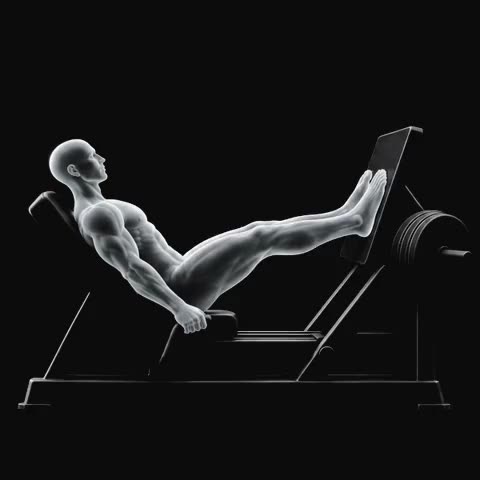
Why machines first? A machine guides the path of the movement, holds your back and limits how far things can go wrong. You can focus on pushing and pulling with control instead of balancing a bar. Free weights are great, and you'll add them in week 3, but they are a second step, not a first one.
Warm up for 5 minutes, not 25
A good warm-up is short. Five minutes on a bike, rower or brisk incline walk raises your temperature. Then do one light set of your first exercise (about half the weight, 10 to 12 easy reps). That's it. Long stretching routines before lifting aren't necessary for beginners and eat into the time you have.
How much weight to use
Pick a weight where the last two reps of each set feel hard, but you could still do 2 or 3 more with good form. Trainers call this "2 to 3 reps in reserve". If you hit 12 clean reps on every set and it felt easy, go up one step next time. If your form breaks before rep 8, go down.
On day one, start lighter than you think. You're learning the movement, and your joints and tendons adapt slower than your muscles. We go deeper in how much weight should a beginner lift.
The 4-week plan
Week 1: learn the machines
Two full-body sessions using the workout above. Use light weights, 2 sets per move, and focus on slow, controlled reps: about 2 seconds down, 1 second up. Write down the weight you used on every machine.
Week 2: same moves, a bit more
Three sessions if you can, two if you can't. Go to 3 sets per move. If any machine felt easy at 12 reps last week, add the smallest step.
Week 3: add your first free weights
Swap the leg press for a goblet squat in one session, and add a Romanian deadlift with light dumbbells. These two teach the squat and hip-hinge patterns you'll use for years.
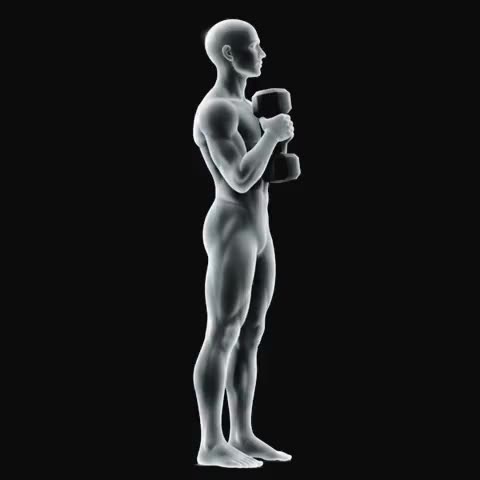
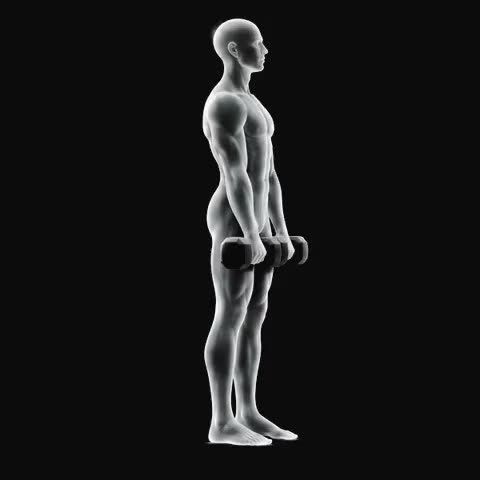
Week 4: build your rhythm
Alternate two workouts so you don't do the same thing every time:
- Workout A: leg press, chest press machine, lat pulldown, plank
- Workout B: goblet squat, Romanian deadlift, dumbbell row, push-up (on your knees or a bench if needed), dead bug
Keep adding small amounts of weight when all your sets feel clean. That small, steady increase is called progressive overload, and it's what makes you stronger.
How to know your form is right
Most beginner mistakes repeat: knees caving in on squats, the lower back lifting off the leg press pad, shrugging on the lat pulldown, hips sagging in the plank. Each exercise guide on this site lists the common mistakes, but it's hard to see yourself while lifting.
Two easy checks: film one set from the side with your phone and compare it to the demo, or use a form check app that watches you live. Musclo's camera form check runs on the phone, counts clean reps and calls out the fix ("knees out", "pin your elbows") in big text you can read from a few metres away.
What to skip in your first month
- Max lifts. You don't need to know your one-rep max. Train with weights you control.
- Ego-lifting. Half reps with heavy weight build bad habits and sore joints.
- Supplements. Eat enough protein from food and sleep 7 to 9 hours; that does more than any powder at this stage.
- Long cardio before weights. If you want cardio, do it after lifting or on another day.
- Copying influencer splits. Six-day programs are built for people who train six days a week.
What if you miss a week?
Nothing is ruined. Go back, use the same weights or slightly lighter for one session, and continue. This is exactly why the plan is full-body: a missed session never leaves a muscle group untrained for two weeks. We wrote a full guide on training when life gets busy.
FAQ
How many days a week should a beginner go to the gym?
Two to three days a week is ideal for beginners. It gives every muscle group enough work to grow and enough rest to recover, and it's realistic to keep up alongside work or school.
How long should a beginner workout be?
About 30 to 45 minutes, including a 5-minute warm-up. Four or five exercises with 2 to 3 sets each fits comfortably in that time.
Should beginners use machines or free weights?
Start with machines in your first two weeks because they guide the movement and are easier to learn safely. Add simple free-weight moves like the goblet squat and dumbbell row from week three.
What should I do on my first day at the gym?
Do a 5-minute warm-up, then 2 light sets each of leg press, chest press, lat pulldown and plank. Write down the weights. That's a complete, successful first day.
How long until I see results from the gym?
Most beginners feel stronger within 2 to 4 weeks as they learn the movements. Visible changes usually take 8 to 12 weeks of consistent training and enough protein.