Blog / Beginner
How Much Weight Should a Beginner Lift?
One simple rule, real starting weights for the most common machines and dumbbells, and exactly when to add more.
A beginner should lift a weight they can move for 8 to 12 clean reps while still having 2 or 3 reps left in the tank at the end of each set. For most beginners that means one or two plates a side on the leg press, 5 to 10 kg dumbbells for presses and rows, and 2 to 5 kg for raises and curls. Go up only when every set feels controlled.
There is no single correct number. Two people of the same size can have very different starting strength, and a weight that is light on one machine can feel heavy on another brand. Instead of a number, you need a rule that adapts to you, and a sensible place to start.
The rule: 2 to 3 reps in reserve
Choose a weight where you finish your set of 8 to 12 reps feeling that you could have done 2 or 3 more with the same clean form. Coaches call this "reps in reserve" (RIR). It keeps you far enough from failure to stay safe and learn the movement, but close enough to make your muscles adapt.
How to find it in practice:
- Do a warm-up set with a weight that feels clearly easy for 10 reps.
- Go up one step and do 10 reps.
- If you could have done 4 or more extra reps, go up another step.
- When the last 2 reps slow down a little but still look clean, that's your working weight.
The ACSM's position stand on resistance training recommends novices train with loads they can lift for about 8 to 12 repetitions. The reps-in-reserve rule is how you find that load without guessing.
Starting weights for common moves
These are typical starting points for an adult beginner with no lifting background. Use them as a first guess, then apply the rule above.
| Exercise | Typical beginner start | Reps |
|---|---|---|
| Leg press | 1 plate a side or the lightest pin | 10–12 |
| Goblet squat | 8–10 kg dumbbell | 8–10 |
| Romanian deadlift | 2 × 6–10 kg dumbbells | 8–10 |
| Chest press machine | lightest 2–3 pins | 10–12 |
| Dumbbell bench press | 2 × 6–10 kg | 8–10 |
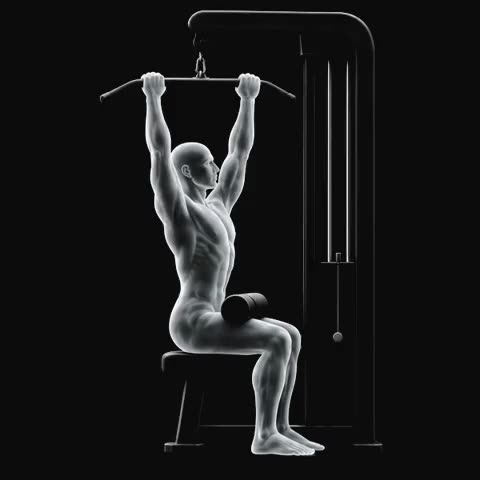
| Lat pulldown | about a third of your body weight | 10–12 |
| Seated cable row | about a third of your body weight | 10–12 |
| Dumbbell shoulder press | 2 × 4–8 kg | 8–10 |
| Lateral raise | 2 × 2–4 kg | 12–15 |
| Dumbbell curl | 2 × 4–8 kg | 10–12 |
If you are smaller, older, or returning from a long break, start at the low end. Machine stacks vary between brands, so a "pin" on one machine isn't the same as on another. Write down the weight for each machine at your gym.
When to add weight
Add weight when you complete all your sets at the top of the rep range with clean form. For example, if your plan is 3 sets of 10 to 12 and you hit 12, 12, 12 with control, go up one step next session.
How big a step:
- Machines: one pin or the smallest plate.
- Dumbbells for big moves (squats, presses, rows): 2 kg.
- Dumbbells for small moves (raises, curls): 1 to 2 kg, or add 2 reps before you go up.
Small steps add up. Adding a little every week or two is called progressive overload, and it's the engine of getting stronger. Jumping too fast is the most common reason beginners stall or get sore joints.
Signs the weight is too heavy
- Your form changes in the last reps: back rounding, knees caving in, hips lifting.
- You use momentum: swinging the dumbbells, bouncing at the bottom.
- You can't control the lowering part (it drops faster than about 2 seconds).
- You feel joint pain rather than muscle effort. Stop and lower the weight; if pain continues, see a professional.
Signs it's too light
- You could do 5 or more extra reps at the end of every set.
- Your breathing and heart rate barely change.
- The last reps feel exactly like the first.
Why your weight changes from day to day
Strength isn't fixed. Poor sleep, stress, a hard day at work or a missed week all make the same weight feel heavier. That's normal. On a bad day, keep the weight and do fewer reps, or drop one step. After a missed week, start one step lighter for one session. If you train irregularly, see how to keep progressing when you can't go every week.
Why machine and dumbbell numbers don't match
Don't be surprised if you press 30 kg on the chest press machine but struggle with two 10 kg dumbbells on a bench. Machines guide the path and often use pulleys or levers, so the number on the stack isn't the real load your muscles feel. Dumbbells also make you balance and stabilise every rep, which takes extra strength you haven't built yet.
That's why you shouldn't convert weights between exercises. Find each starting weight separately with the reps-in-reserve rule, then progress each exercise on its own.
Keep a log (it's the whole trick)
The single best habit for a beginner is writing down the weight and reps for every set. Without a log you guess each session, usually too light or too heavy, and you can't tell if you're progressing. A notes app works; a workout app that remembers your last session and suggests the next weight is easier.
Women and starting weight
The same rule applies to everyone. Many women start lighter on upper-body moves and relatively stronger on leg and glute moves like the leg press and Romanian deadlift. Lifting heavy enough for 8 to 12 hard reps won't make anyone "bulky" by accident; building a lot of muscle takes years of deliberate training and eating.
FAQ
How much weight should a beginner lift?
Lift a weight you can move for 8 to 12 clean reps with 2 or 3 reps left in reserve. For most beginners that's 5 to 10 kg dumbbells for presses and rows and 1 to 2 plates a side on the leg press.
Is it better to lift heavy or light as a beginner?
Moderate is best: heavy enough that the last reps are hard, light enough that your form stays clean. Very light weights build little strength, and very heavy weights make it hard to learn the movement.
How fast should a beginner increase weight?
Add the smallest step whenever you complete all sets at the top of your rep range with good form. For many beginners that's every one or two weeks on the big moves.
Should I lift to failure as a beginner?
No. Stopping 2 or 3 reps short of failure gives nearly the same results with less fatigue and lower injury risk while you learn technique.
How do I know if I'm lifting with good form?
Compare your set to a demo, film yourself from the side, or use a form check app. Common signs of breaking form are a rounding back, caving knees, swinging and bouncing.